


Green roofs are a testament to human ingenuity, blending architecture with nature to create sustainable, beautiful spaces. Yet when it comes to sloped green roofs, the design challenges rise to new levels. Imagine a lush garden draped across a tilted rooftop, while visually stunning, it demands a hidden network of engineering to function effectively. The key challenges? Managing water drainage and working with gravity.
Here’s how these roofs overcome these obstacles to thrive.
The Challenge of Gravity on Sloped Roofs
Unlike flat green roofs, sloped green roofs face relentless gravitational pull. Water doesn’t settle evenly on a slope; instead, it flows downward, which can lead to erosion, poor plant growth, and water pooling at the base. These issues make designing sloped green roofs a complex task, requiring careful planning and innovative solutions.
Plants on a slope are also subject to gravity’s challenges. Over time, soil and vegetation can shift downward, especially after heavy rain, threatening the roof’s stability. Without proper design, a sloped green roof could end up as a patchy, barren landscape.
Engineering Solutions for Water Management
One of the most significant aspects of sloped green roof design is water drainage. To prevent water from rushing to the bottom of the slope, engineers use specialized layers to control water flow and retain moisture where it’s needed most.
Drainage Layers and Retention Mats
Beneath the plants lies a system of drainage layers that are the heart of a sloped green roof. These layers typically include materials like perforated membranes or drainage mats. Their role is to allow excess water to flow off the roof while retaining enough moisture for plants to survive.
For steeper slopes, retention mats are often added. These mats have textured surfaces that slow the water down as it moves, reducing the risk of erosion and ensuring even distribution.
Rainwater Management Systems
Sloped green roofs often incorporate rainwater management systems, such as gutters or collection channels. These features are carefully placed to capture runoff without disrupting the roof’s structural integrity. Some designs even include irrigation systems that redistribute collected rainwater back across the roof, promoting sustainable water use.
Keeping Plants in Place
Another challenge unique to sloped green roofs is stabilizing soil and plants. Without proper measures, gravity can cause the substrate to slide, displacing the vegetation. To prevent this, sloped green roofs often employ reinforcement techniques.
Root-Stabilizing Systems
Reinforced geogrids or mesh layers are often integrated into the roof’s design to cradle the soil and hold plants in place. These systems are incredibly effective, anchoring the vegetation even on roofs with significant incline.
Plant Selection
Not all plants can thrive on a sloped surface. For sloped green roofs, engineers and horticulturists focus on low-maintenance, drought-tolerant species with strong root systems. Sedums, grasses, and hardy perennials are popular choices because they resist erosion while spreading to cover soil evenly.
Environmental and Aesthetic Benefits of Sloped Green Roofs
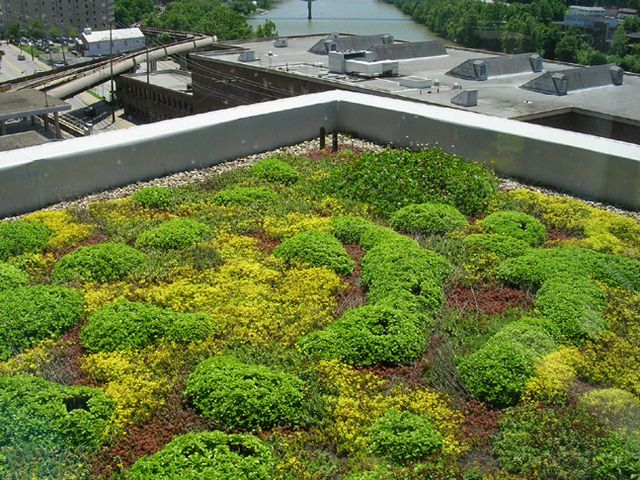
Beyond their structural complexities, sloped green roofs provide a wealth of benefits. They enhance urban biodiversity, offering habitats to pollinators and birds. By managing rainwater effectively, they reduce stress on city drainage systems, lowering the risk of flooding. In addition, their insulating properties help regulate building temperatures, reducing energy consumption.
Of course, the aesthetic impact cannot be overlooked. Sloped green roofs transform steep rooftops into cascading green vistas, making cities more beautiful and inviting. They also break up the monotony of urban environments, introducing natural textures and colors.
Conclusion
The engineering behind sloped green roofs is a masterful balancing act between nature and innovation. From specialized drainage layers to stabilizing systems, every component plays a crucial role in managing water and gravity. The result? Green roofs that turn sloped structures into functional, eye-catching spaces with long-lasting environmental benefits.