


Urban environments are often bustling with energy, movement, and noise. From the constant hum of traffic to the chatter of daily activities, cities carry a soundscape that’s hard to escape from. Yet, amid the cacophony, green roofs are emerging as a surprising solution to one of the urban experience’s most persistent problems, noise.
But how exactly can plants do such heavy lifting in soundproofing?
Let’s explore the science behind green roofs and their amazing potential to create quieter, more peaceful cities.
How Green Roofs Reduce Noise?
At first glance, the idea of plants acting as soundproofing materials might seem far-fetched. Yet, research has proven that green roofs possess remarkable noise-reducing properties. The secret lies in their layered structure.
Green roofs are made up of several components, including vegetation, soil or growing medium, and drainage layers. Each of these layers plays a role in absorbing, reflecting, or diffusing sound waves. For instance, the soil layer dampens sound by trapping and dissipating sound vibrations. Meanwhile, the dense network of plants and roots further prevents noise from traveling freely, acting almost like a natural barrier.
Studies show that green roofs can reduce external noise by up to 40 decibels or more, depending on their thickness and composition. For perspective, this can mean the difference between loud, disruptive traffic noise and a manageable, muted hum.
Soundproofing Beyond Buildings
The soundproofing power of green roofs extends beyond individual buildings. On a larger scale, more widespread adoption of green roofs could contribute to an overall quieter urban environment. Imagine a city where rooftops are covered with lush greenery that absorbs much of the harmful noise pollution. It isn’t just a dream but a potential future, as cities worldwide integrate green roofs into their urban planning efforts.
By muting sounds, green roofs can also create more peaceful shared spaces. For example, outdoor terraces or rooftop gardens that feature green roofing become havens of calm amidst the chaos. These spaces encourage relaxation, socialization, and mindfulness, free from the usual din of the city.
More Than Just Noise Reduction
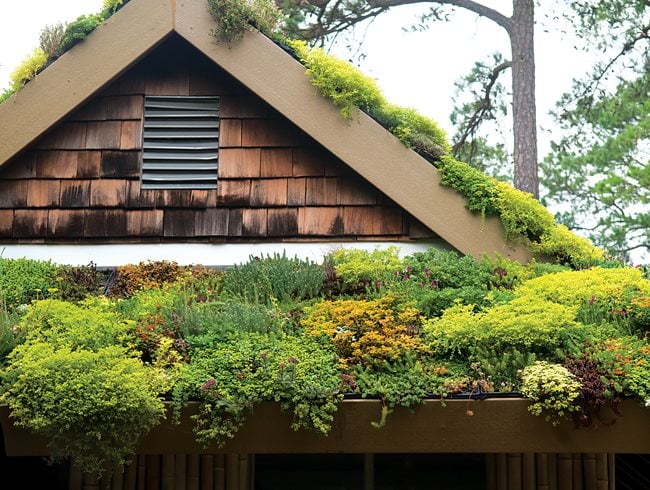
While their soundproofing capabilities are impressive, green roofs bring additional benefits that make them even more appealing for urban areas.
Environmental Impact
Green roofs contribute to the fight against climate change by improving air quality and reducing heat. Vegetation on rooftops absorbs carbon dioxide and releases oxygen, counteracting pollution. They also act as a natural insulator, reducing the urban heat island effect and minimizing energy use in buildings. This dual function of cooling and soundproofing makes green roofs an eco-friendly upgrade for cities.
Aesthetic Appeal
Green roofs aren’t just practical, they’re beautiful. From lush wildflowers to manicured grasses, the visual appeal of a green roof stands in stark contrast to the usual monotony of urban concrete. They provide greenery where land is limited, offering city residents a visual escape into nature.
Boosting Biodiversity
Green roofs also create habitats for birds, insects, and other small creatures, enhancing biodiversity in cities. By promoting wildlife in urban environments, these roofs help balance natural ecosystems often disrupted by city development.
Conclusion
Green roofs are more than an architectural trend, they represent a smart, sustainable way to address some of the biggest challenges facing urban areas. By reducing noise pollution, improving air quality, and adding much-needed greenery, green roofs can make city living more enjoyable and less stressful.
Their ability to silence the hustle and bustle is proof that nature can coexist harmoniously with urban spaces. It’s time we look to the rooftops for solutions, transforming our cities into quieter, greener, and more livable spaces.