

Mitigation vs. Restoration: Understanding the Two Phases
Water damage response has two distinct phases that are often conflated by property owners unfamiliar with the process. Mitigation – stopping ongoing damage and drying affected materials – is the urgent first phase. Restoration – repairing and replacing what was damaged – is the second phase, which cannot begin until mitigation is complete and verified. Attempting restoration before mitigation is complete produces restoration work that fails because it was installed over materials with elevated moisture content.
The mitigation timeline is determined by the moisture content of the affected materials, not by a fixed number of days. Wood framing that has absorbed water deeply takes longer to dry than drywall that was wet for only a few hours. Subfloor that is trapped between flooring above and joists below has restricted airflow and dries more slowly than open surfaces. Professional mitigation addresses each material based on its specific drying characteristics rather than applying a uniform timeline.
Documentation during mitigation supports the insurance claim and provides the evidence that drying was completed to the appropriate standard. Moisture readings taken at each visit – with readings documented by location, material type, and reading value – create the drying log that demonstrates the process was thorough and complete.
The Drying Equipment and Why It Matters
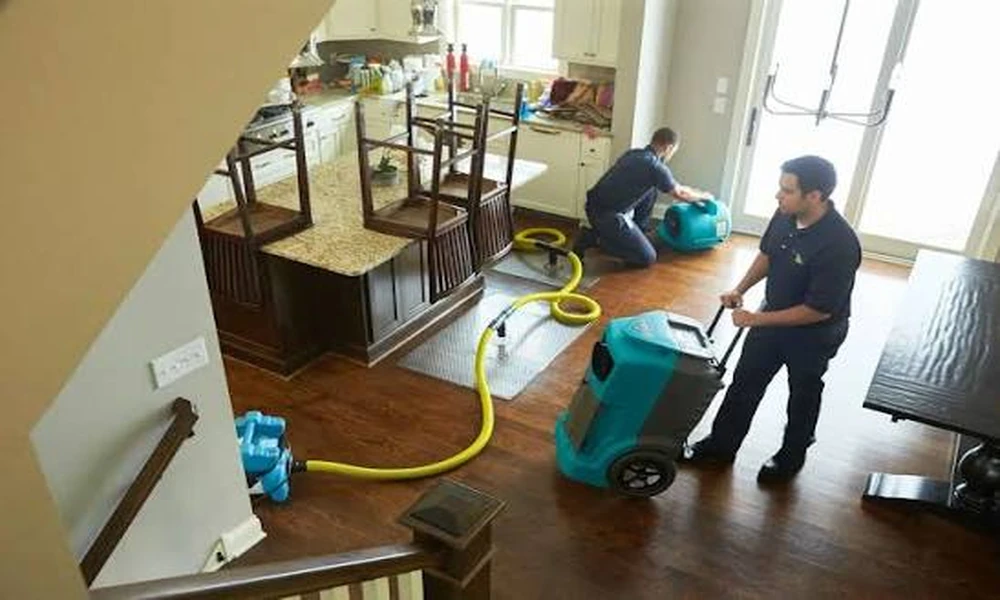
Water mitigation and cleanup in Columbia uses industrial equipment calibrated for the specific conditions of each affected space. The combination of high-velocity air movers that create turbulent airflow across wet surfaces and commercial dehumidifiers that extract moisture-laden air from the space produces the drying conditions that residential fans and dehumidifiers cannot achieve.
Equipment placement is a technical decision based on the geometry of the affected space, the materials involved, and the current moisture readings. Air movers positioned to create directed airflow across wet surfaces – rather than random air circulation – dry materials more efficiently. Dehumidifier placement that captures the moisture-laden air produced by the air movers rather than allowing it to disperse into adjacent spaces maximizes extraction efficiency.
IICRC certification for water damage restoration professionals includes training in equipment selection, placement, and monitoring – the technical knowledge that produces efficient drying outcomes rather than extended drying periods that add to remediation cost and secondary damage risk.
Mold Prevention During Drying
The primary purpose of rapid, thorough drying is mold prevention. Mold spores are ubiquitous in indoor environments and become active when relative humidity in the immediate environment of a suitable substrate rises above approximately 60 percent for a sustained period. Materials with elevated moisture content create exactly these conditions – which is why drying speed matters as much as drying completeness.
Antimicrobial treatments applied to affected surfaces during mitigation – a standard practice in professional restoration – reduce the microbial load that the elevated humidity conditions would otherwise support. These treatments are not a substitute for thorough drying; they are a complement to it that provides an additional margin during the drying period.
If visible mold is present at the time mitigation begins – indicating that the water event is not recent or that a previous event went unaddressed – the scope of work expands to include mold remediation protocols alongside standard water damage drying. Mold remediation involves containment of affected areas, removal of materials with active growth, and clearance testing before restoration proceeds.