


Most commercial roofs start with some early signs before there’s a full-blown leak. A seam that is loose, a drain that is clogged, a punctured membrane or damaged flashing can result in wet insulation, interior water damage and work disruptions if left unaddressed. Timely commercial roof repair can go a long way in keeping buildings protected, limiting long-term expenses, and increasing the longevity of the roofing system.
What Makes Commercial Roof Repair Critical?
Commercial roofs usually cover large areas and hold roof-mounted equipment and foot traffic while constantly being exposed to the elements. Many of them are low-slope roof systems (as you can see at wbdg.org), in other words, water does not run off as fast as it does on higher pitched roofs. Poor drainage or damaged materials can make water stay too long and get through the building envelope.
In addition to ceiling tiles getting damaged, water can also affect insulation, electrical wiring, inventory, office flooring, and even the building’s framework. The roof issue in buildings with people can also create safety issues for employees, tenants, or customers. It’s all about keeping the building envelope intact, which is what commercial roof repair is all about, not just stopping a leak.
What are the Signs That Your Roof Needs Repair?
While some roofing issues can be seen from the inside of the building, other signs may require you to do a closer inspection. These are signs that property owners and facility managers must be aware of:
- Water stains on walls or ceiling
- Standing water in the roof after rain
- Membrane that is cracked, blistered or bubbled
- Flashing that is loose near corners or rooftop equipment
- Musty odors inside the building
- Accumulated debris near drains
- Repeated leaks in the same spot
- Unexplained increase in heating/cooling bills
If you even have one of these signs it means something may be going wrong. It is much more likely that just a few simple repairs will be needed, if the issue is addressed as early as possible.
low slope commercial roof with rooftop equipment and drainage areas
What Usually Causes Commercial Roof Damage?
One of the leading causes of commercial roof problems is the weather. Exposing the roof’s surface to the sun can dry it out; wind can peel off the edges of the membrane; rain can uncover damaged areas that do not allow for proper drainage or can expose weak seams. Hail, tree branches or any other object that falls onto the roof during high winds or freeze and thaw cycles can also cause problems.
Another common source of damage is foot traffic. Roof personnel often have to walk over the roof (view it) in order to service HVAC units, plumbing vents and other roof mounted equipment. Constant foot traffic can abrade or weaken the roofing membrane and make it vulnerable to punctures.
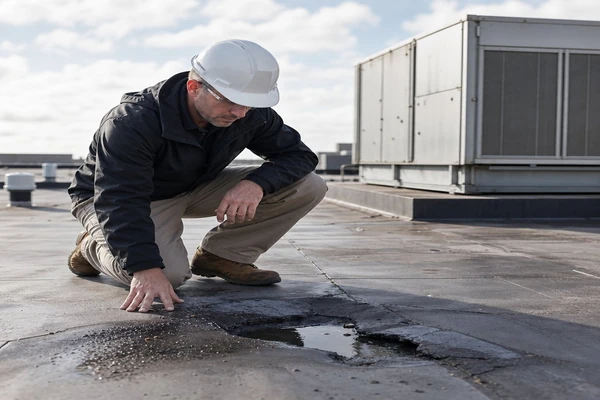
commercial roof technician inspecting membrane damage near rooftop equipment
“Most commercial roof leaks start at or near drains, penetrations and transitions, rather than across the open field of the roof,” says Elena Marsh, commercial roofing inspector. “Which is why a thorough inspection is just as vital as the actual repair.”
What are the Different Types of Commercial Roof Repair?
The type of commercial roof repair that will need to be done depends upon many factors. The age of the roof, type of roofing material that was used, and the extent of the damage, are just a few of the important factors. Some of the common repairs used by property owners include:
- Leak repairs: Identifying where water is entering the building and patching that spot.
- Membrane patch repairs: Punctures, tears and other damaged parts of the surface membrane are patched.
- Flashing repairs: Fixing or replacing the flashing in wall curbs, vents or equipment.
- Drain repair: Removing debris or adding additional drains to allow water to drain from the roof surface.
- Seams and flashing repair: Weak or separated seams in the membrane are resealed.
Even small, simple repairs go a long way as they prevent water from entering the deeper layers of the roofing system.
To Replace or Repair the Roof?
While it makes sense to fix the roof when the issue is localized and the rest of the roof is still in good shape, replacing it can make more sense when the leaks are in several different areas, insulation is saturated and/or the roof is at the end of its lifespan. Another consideration is the number of repairs that have been done in the past and how often they are needed. Property owners and facility managers have to take into consideration both the immediate problem as well as the overall value of the building, to decide the best option.
A Roof That Is Protected From the Top Down
Frequent inspections, keeping roof drains free of debris, timely repairs and maintenance are the keys to avoiding larger roofing problems in the future. It can be much easier to make decisions regarding roof repairs if there is a record of the roof system’s past performance and repairs. When a roof is performing well, most building owners don’t give it a second thought. Addressing roof issues when they first start can prevent expensive problems later on.