

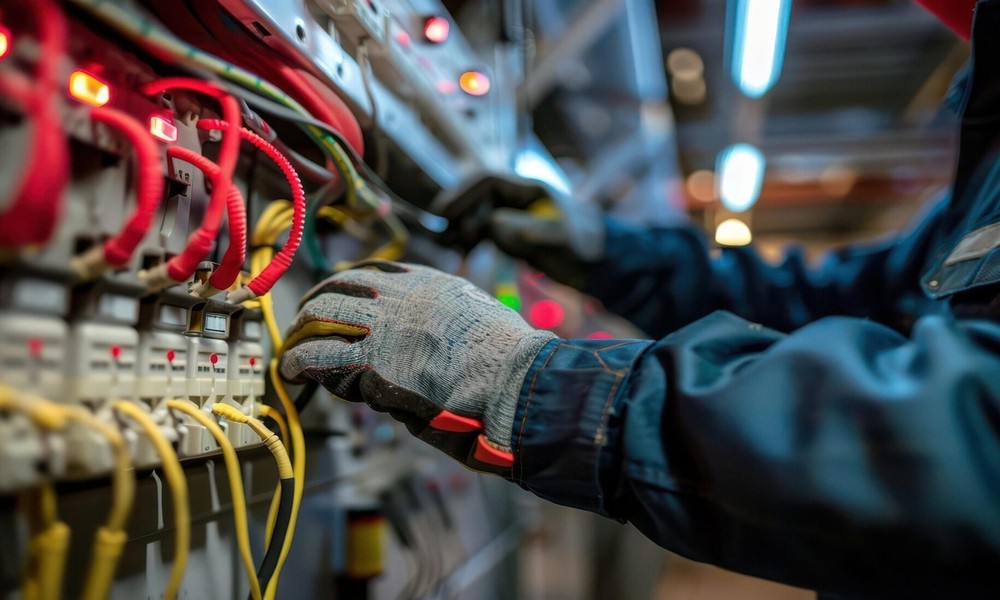
What a Licensed Electrical Worker Is Under Singapore Law
LEW Singapore services are provided by individuals holding a licence issued by the Energy Market Authority under the Electricity Act (Cap. 89A), certifying that they are qualified to carry out, supervise, and certify electrical installation work on electrical systems in Singapore. The term LEW is frequently confused with general electrician work, but the distinction is legal as much as technical. A Registered Electrical Worker is qualified to carry out electrical work. An LEW is qualified to take personal responsibility for the safety and compliance of an electrical installation, to certify completed works, and to be appointed as the responsible person for an installation with a maximum demand above the threshold that triggers the mandatory LEW appointment requirement.
When the Law Requires an LEW Appointment
LEW Singapore appointment is mandatory for any electrical installation with a maximum demand exceeding 45 kilovolt-amperes. Most commercial and industrial premises in Singapore exceed this threshold. A small shophouse or retail unit drawing less than 45kVA from its SP Group supply may not trigger the requirement. A typical medium-sized office, restaurant, or light industrial unit almost certainly will. The maximum demand of an installation is calculated from the connected load and the assessed demand factor, and the appointed LEW is the person whom the EMA holds responsible for ensuring the installation operates safely and in compliance with the Electricity (Electrical Installations) Regulations throughout its service life.
Buildings that fail to appoint an LEW when required, or that carry out notifiable electrical works without involving an LEW, expose the building owner and the contractor to enforcement action by EMA, including fines and stop-work orders.
The EMA Licensing Framework: Classifications and Scope
LEW Singapore licensing operates under a classification system that defines the scope of electrical work each licence holder is authorised to certify. The two principal classes are the Licensed Electrical Worker for low voltage installations, covering systems operating below 1,000 volts alternating current, and the Senior Licensed Electrical Worker or Licensed Electrical Engineer for high voltage systems above that threshold. Most commercial buildings in Singapore operate on the low voltage SP Group public network and require a low voltage LEW. Industrial facilities with their own substations receiving high-voltage supply from the grid require a senior-class licence holder.
To qualify for LEW licensing, candidates must hold a recognised electrical engineering qualification, accumulate a minimum period of practical electrical work experience under supervised conditions, and pass EMA’s LEW examination, which tests both technical knowledge and knowledge of the regulatory framework governing electrical installations in Singapore.
Notifiable Works and the LEW Certification Requirement
LEW Singapore services are required for all notifiable electrical works, which are defined under the Electricity (Electrical Installations) Regulations as works that alter or add to an existing installation’s fixed wiring, change its maximum demand, or involve the installation of new switchboards, submains, or final subcircuits of defined capacity. Before notifiable works commence, the appointed LEW must submit a notification to EMA through the e-Filing system. After completion, the LEW must certify the works by submitting a Notice of Completion confirming that the installation has been tested and found to comply with the Singapore Standard SS 638 and the applicable regulations.
“Singapore’s electrical safety record is a direct consequence of the rigorous licensing framework EMA maintains for electrical workers. The LEW system ensures that every significant electrical installation has a qualified professional accountable for its safety,” Energy Market Authority Chief Executive Ngiam Shih Chun stated when presenting EMA’s electrical safety statistics to Parliament.
Periodic Testing and Inspection: The LEW’s Ongoing Responsibility
LEW Singapore electrical services extend beyond the initial installation certification to periodic inspection and testing that the Electricity (Electrical Installations) Regulations mandate at defined intervals. Electrical installations must be tested at intervals not exceeding five years, with the LEW certifying after each test that the installation remains safe and compliant. The periodic test covers insulation resistance of wiring, earth continuity of all metalwork, operation of residual current devices, and verification that protective devices are rated and connected correctly for the circuits they protect.
Installations that have not been periodically tested within the required interval are in breach of the regulations, and the appointed LEW who allows a due test to lapse without arranging a replacement is personally liable for that breach.
What LEW Services Cover in Practice
LEW Singapore service engagements cover the full scope of responsibilities that the regulations place on the appointed person. This includes reviewing electrical drawings and specifications before notifiable works commence, supervising or directly carrying out the electrical installation work, testing the completed installation using calibrated instruments against the acceptance criteria in SS 638, preparing and submitting the Notice of Completion to EMA through e-Filing, and retaining records of all testing and certification for the period required by the regulations.
An LEW also advises the building owner or facilities manager on the condition of the installation between periodic tests, flagging deteriorating insulation, overloaded circuits, or switchboard conditions that require attention before the next scheduled test.
Choosing an LEW Service Provider in Singapore
LEW Singapore services providers should be verified as holding a current EMA licence, which can be confirmed through EMA’s public register. The licence must be current and not subject to conditions that restrict its scope. Providers who can show a track record of periodic testing and certification at comparable premises, who maintain calibrated test equipment with current calibration certificates, and who are familiar with EMA’s e-Filing system and documentation requirements deliver a service that keeps the building genuinely compliant rather than appearing compliant.
LEW Singapore services that combine technical rigour, regulatory knowledge, and proper documentation provide the foundation of safe and certified electrical work that every building requires.